
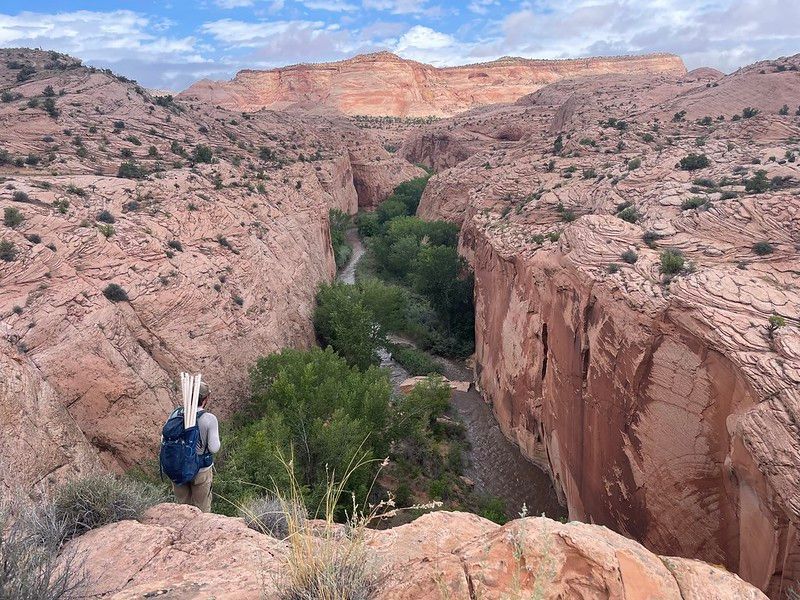
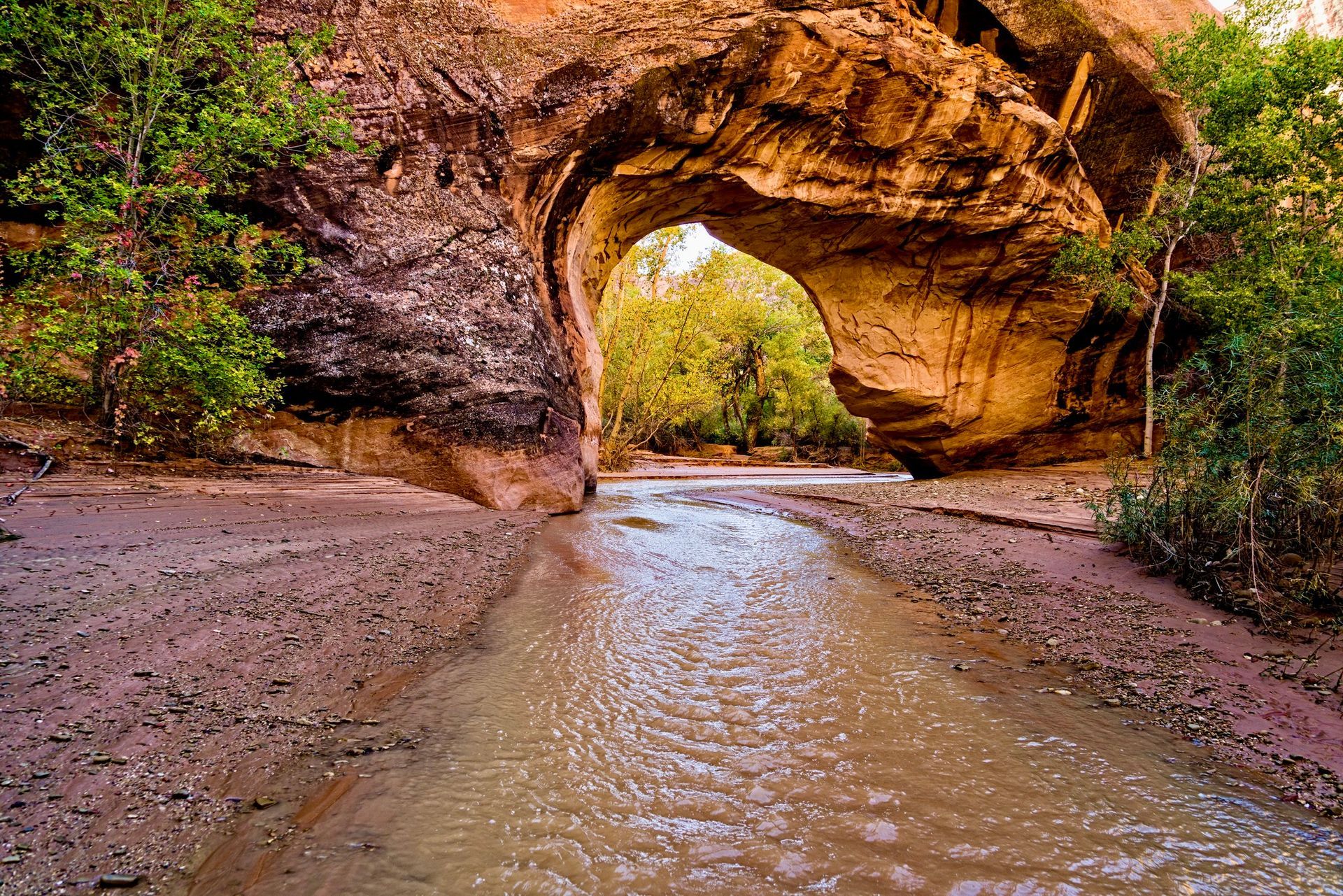
For more than 16 years, Grand Staircase Escalante Partners has been leading a restoration effort both ambitious in scale and vision. Working across 1.9 million acres of rugged terrain in Utah, the Partners collaborate with landowners, federal agencies, youth corps crews, scientists and nonprofits like Forever Our Rivers to remove tight, crowded thickets of invasive species that alter the rivers natural flow and narrow its channels, making access for both wildlife and recreationists difficult. For these teams of river champions, the work is as hot and physically demanding as it is scientifically valuable. They trek into backcountry reaches of the Escalante to survey vegetation plots, documenting plant composition and canopy structure. Their findings help reveal how native communities recover after invasive species are removed, and identify which areas may need additional restoration attention.
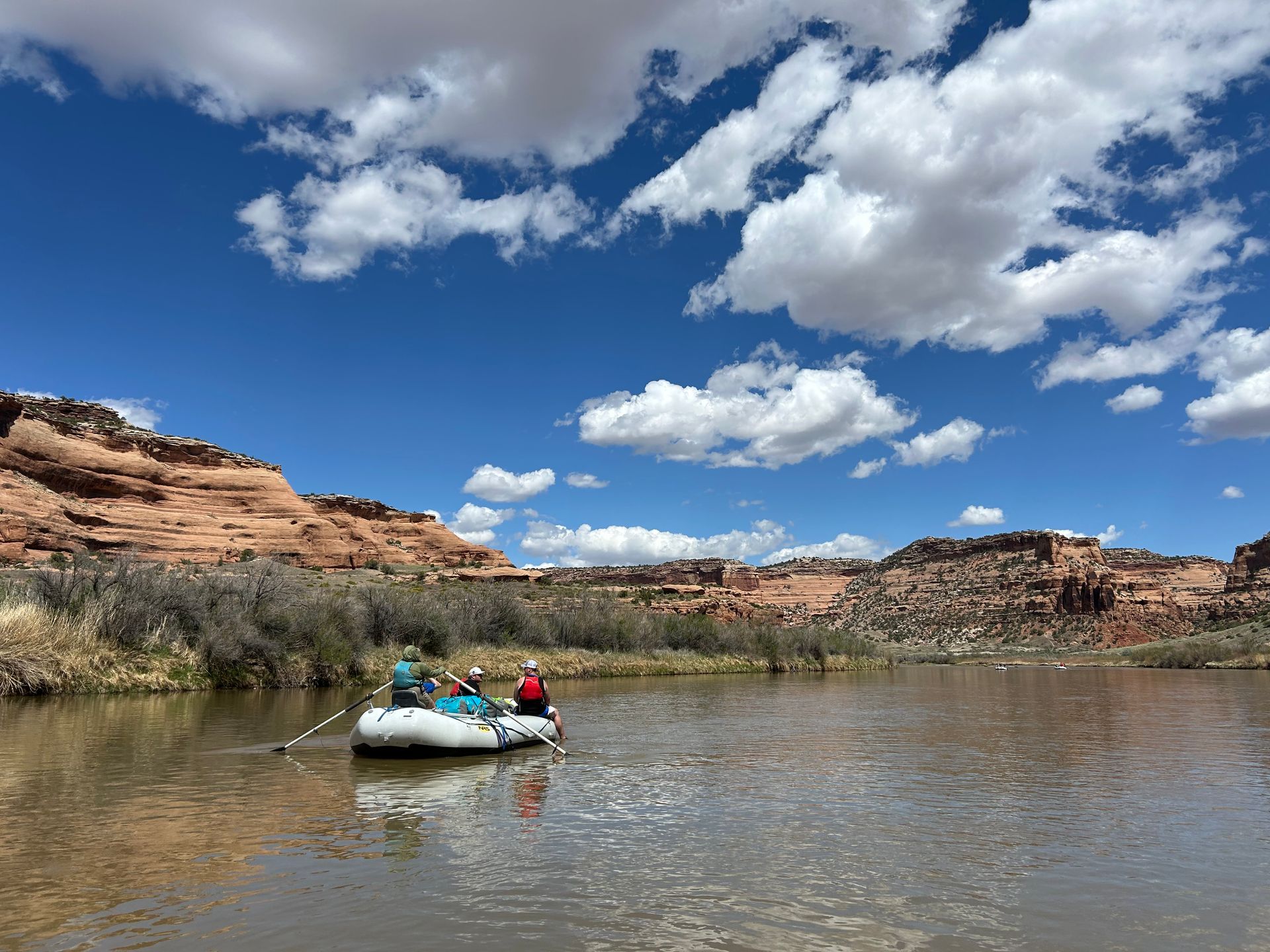
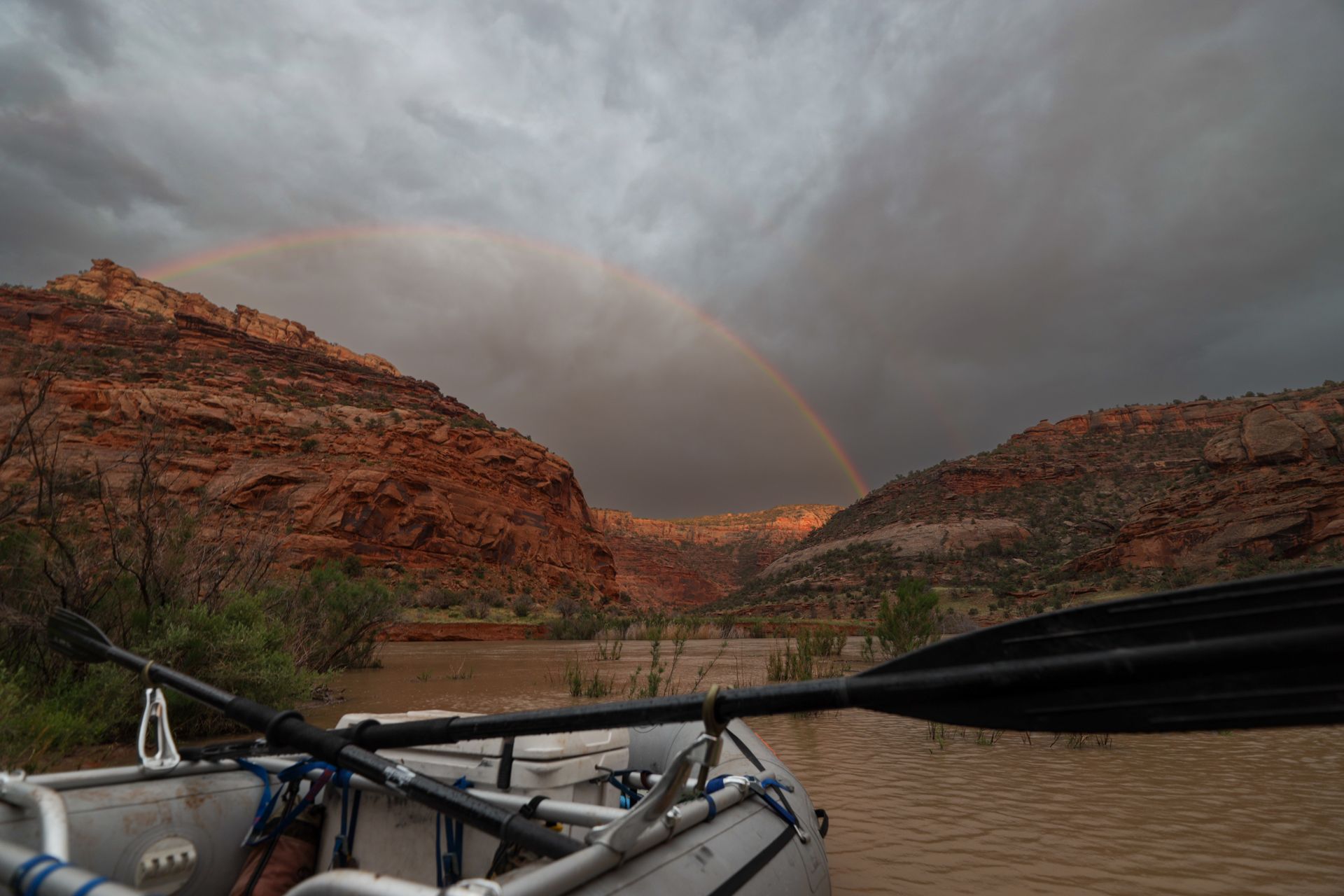
For many, while rivers and streams may be nearby, they can feel out of reach. Thankfully, Colorado Canyons Association is here to change that. As the primary friends group of three national conservation areas on Colorado’s Western Slope, Colorado Canyons Association brings positive change to communities by offering unique, place-based “learn by doing” adventures for both youth and adults. Colorado Canyons Association’s staff of river guides, educators, and volunteers deliver reduced and cost-free environmental education curriculum centered on river ecosystems and land conservation. Every participant, regardless of income, can safely experience the joy and wonder of a full day of boating on the Gunnison River. And the adventures include more than recreation. For many it is their first time on a boat, seeing a bald eagle up close. Others improve their paddling skills, test water quality and examine fragile riparian habitats. All deepen their understanding of our dependence on rivers and how they provide homes for wildlife, nourish our farms and ranches, and protect our way of life.
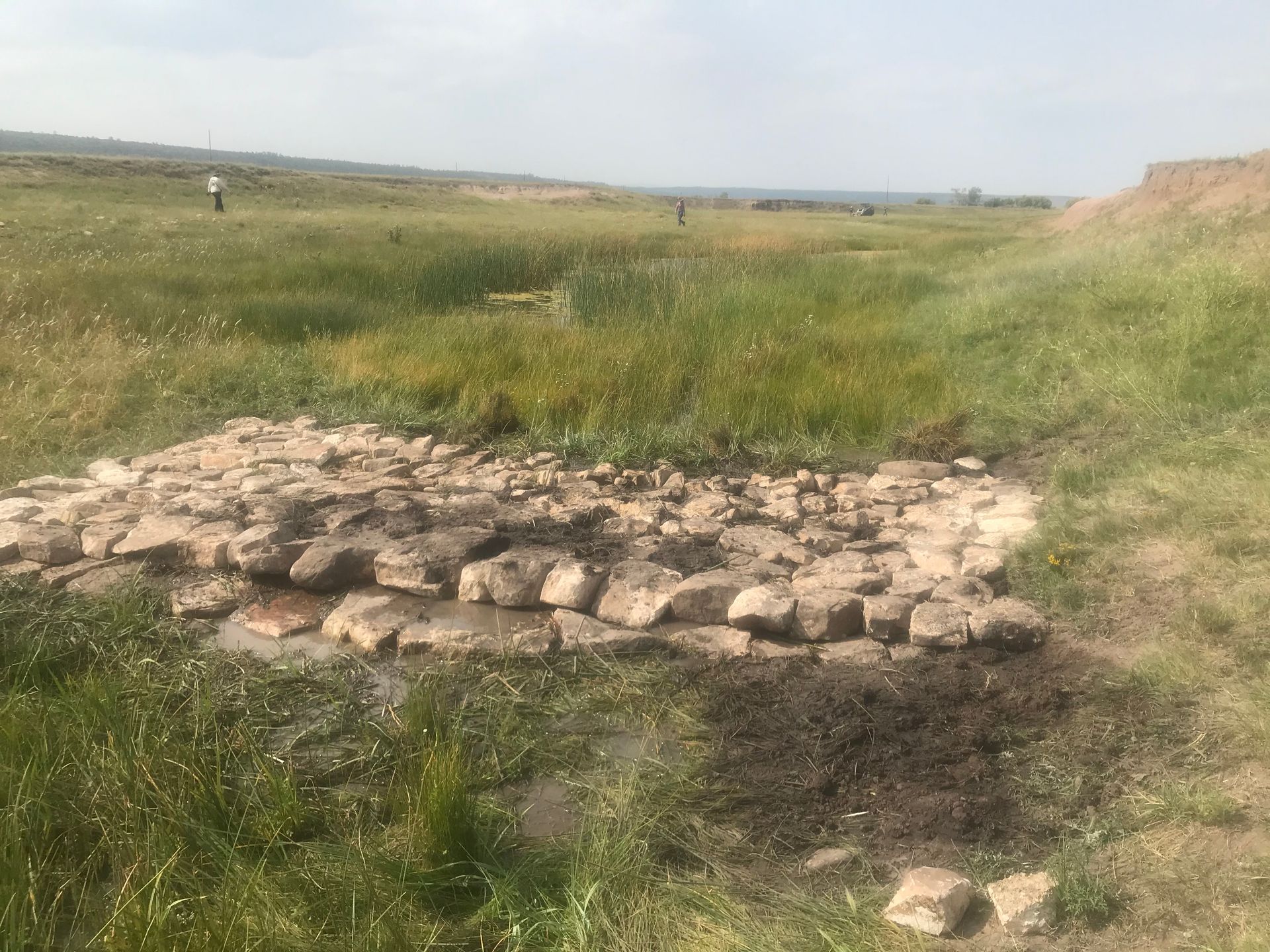
Healing Northern New Mexico’s Watersheds, One Stream at a Time In the Sangre de Cristo Mountains north of Las Vegas, New Mexico, the scars of the 2022 Hermit’s Peak–Calf Canyon Fire still mark the land. For the team at Hermit’s Peak Watershed Alliance, those scars also tell a story of resilience. Since 2009, the Alliance has worked to restore and protect the region’s rivers and streams, helping both people and nature recover from fire, drought and erosion. This summer, in partnership with Forever Our Rivers, the Alliance expanded its work into the Upper Mora and Tecolote watersheds—areas hit hardest by post-fire flooding. With support from the Las Vegas New Mexico Community Foundation, crews are building demonstration sites that show how simple, locally led restoration can help heal fire-scarred landscapes. Using rocks, logs, willow branches and native seed, a small field crew constructs natural structures that slow water, capture sediment and rebuild soil. These small interventions help water linger longer on the land, encouraging plants to return and stabilizing eroding streambanks. Much of the work takes place on private ranchlands, where landowners are essential to conservation. In New Mexico, most water flows through working lands managed by families who hold deep ties—and often water rights—to their creeks and pastures. The Regensberg family, whose property was severely affected by the fire, wanted to turn that devastation into an opportunity to rebuild. Together with the Alliance, they’re restoring the stream that winds through their ranch, creating shallow meadows, pools and wetlands that provide habitat for birds and wildlife while reconnecting the river to its floodplain. “The goal isn’t just to fix what was damaged,” said a member of the Alliance team, “but to bring back complexity—to let the river do what it does best when given the chance.” The Alliance also works closely with the New Mexico Acequia Association and its youth crews, blending watershed science with generations of traditional water knowledge. This partnership connects young people to their heritage while giving them practical experience in caring for the land. By year’s end, the combined efforts are expected to restore nearly two miles of stream, construct about 60 instream structures and improve close to 20 acres of burned terrain. Just as importantly, these projects are building a community of stewards who see that meaningful change doesn’t require heavy machinery—just commitment, collaboration and trust in nature’s design. Hermit’s Peak Watershed Alliance’s work mirrors the values of Forever Our Rivers: community empowerment, partnership and practical, nature-based restoration that benefits both people and wildlife. Together, they’re proving that even after fire and loss, recovery can start with something as simple as a few rocks, logs and willing hands. Images: Courtesy Hermit’s Peak Watershed Alliance Learn more or donate at foreverourrivers.org/donate
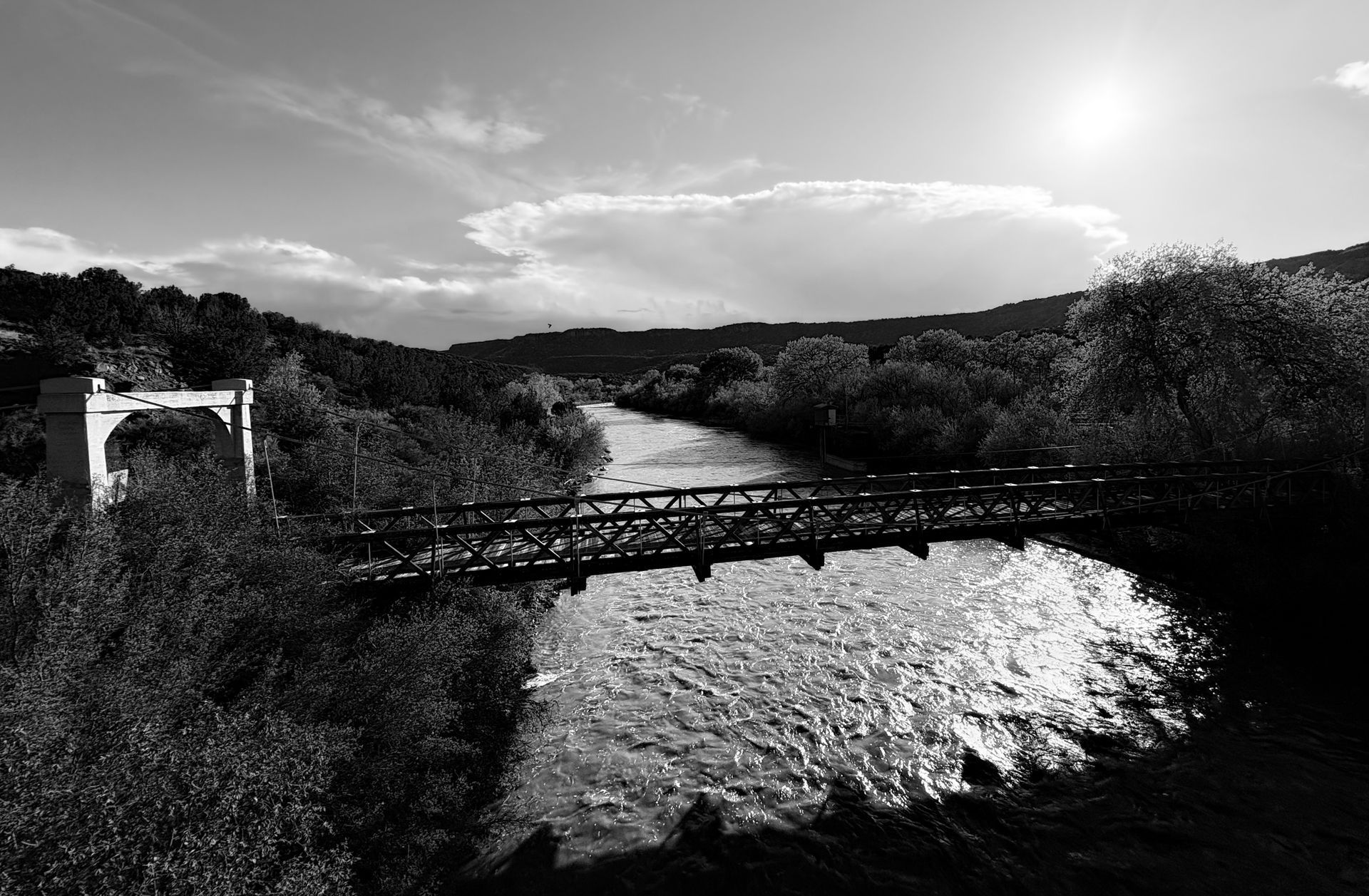
When I think about river conservation, I picture swollen, muddy creeks during spring runoff, irrigation ditches feeding lush farmlands in tranquil Western landscapes, and swallows dancing above a glassy river at sunset. And I picture people. People like you hauling buckets of water to a freshly planted cottonwood. People like your neighbors removing invasive trees by hand in a desert canyon. People kneeling beside a stream, testing the water with watchful curiosity. Conservation and restoration may start with a shovel and a seedling, or just an idea, but at its core it’s about connection—between people and rivers, communities and ecosystems, hope and hard work. Thanks to dedicated people like you, transformation is made possible. And the results are impressive. Take, for example, the Escalante River. A vision turned into a decades-long effort to remove invasive Russian olive trees so that native wildlife could thrive has now resulted in 85 miles of river corridor restoration. Think about that: 85 miles of healthier habitat, cleaner water and renewed life in one of Utah’s most iconic landscapes. All because someone like you cared enough to begin—and to keep going. It’s also worth pausing to reflect on something important: Conservation and restoration are not the same—but they work hand in hand. Conservation is about protecting what’s still intact—keeping rivers flowing so that species such as otters, moose and butterflies can thrive. Restoration, on the other hand, is about healing damaged ecosystems—bringing rivers back to life after decades of drought or degradation. Both are essential. And together, they create lasting change. And now, more than ever, these efforts are gaining momentum. But there’s no such thing as perpetual motion. Your support helps keep that momentum going. In the face of sustained drought, lower flows and higher fire danger, enthusiasm for conservation and restoration is growing. But so is the need. State-run programs, tribal nations, nonprofits and local landowners are working together in ways we’ve never seen before. And yet, the future of this movement will depend on something less formal but even more powerful: the sustained effort and support of our communities. With your help, landowners are protecting wildlife habitat while keeping agricultural land productive. In Colorado, volunteers are teaching kids about river ecology, helping the next generation grow up connected to the outdoors. Across the Southwest, nonprofit partners are restoring rivers and building community. Friends of the Verde River are replanting rare cottonwood habitat, benefiting hundreds of species. In Colorado, RiversEdge West and the Upper Clear Creek Watershed Association are improving riparian health and tackling legacy degradation. Friends of Youth and Nature are connecting kids to the outdoors, fostering the next generation of river stewards. And in Denver, River Sisters is creating a healing, inclusive space along the South Platte River. Together, these efforts reflect a growing movement to protect rivers, support wildlife and empower people to care for the places they love. Forever Our Rivers is grateful for your support of these initiatives. Every one of the stories above has been touched by your commitment. From desert canyons to city waterways, from conservation to restoration, this is the future—ours to shape, together.
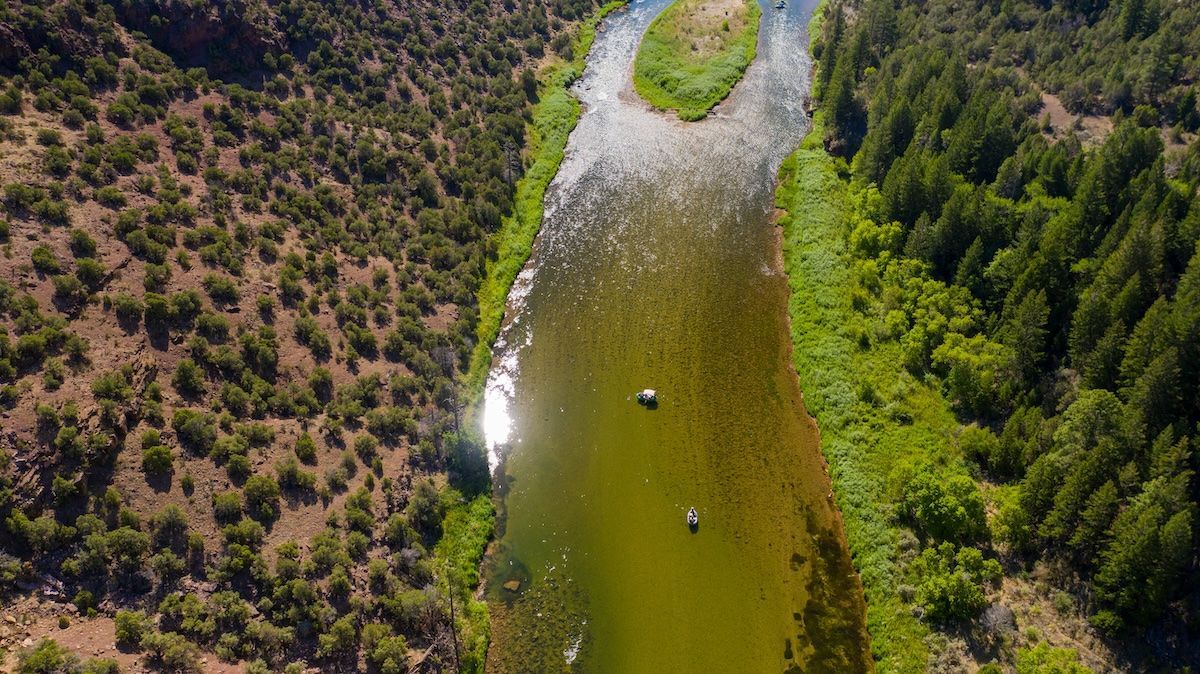
The warmer, sunny weather in Crested Butte this week makes me smile as I know spring isn’t far behind. Soon the Sandhill cranes will begin their migration, and flowers will ever so slowly peek out from the forest floor. But we are in no hurry here at the headwaters of the Colorado River. A long and snowy winter in the northern Rockies has left high elevations north of the Colorado and Utah Borders buried deep under several feet of snow. Even so, nature is calling us all to step outside and enjoy the longer days. And now, like never before, is the time when people need nature—and nature needs us. At Forever Our Rivers, January blew in with encouraging momentum. Heading into our tenth year, with strong partnerships across the four corners region, strategies to improve wildlife habitat for moose, otters, fish and songbirds were in place, and in the southern reaches of the Colorado River basin boots were already on the ground. Communities large and small were behind an extraordinary push to save our state’s rivers, ramp up habitat restoration and care, and assist communities with water quality and quantity. In fact, as we started out this year, it looked like we would be able to accelerate the pace of local river conservation and also work on wildfire mitigation. But now, I’m sorry to report that we and other local conservation organizations are facing major challenges. The current freeze and imminent loss of federal conservation funds will significantly impact our efforts and those of our partners. Many are still trying to assess and predict what’s coming next. Forever Our Rivers is working diligently to keep programs going through other forms of funding. Thankfully, people like you care. That’s why I’m asking for your help given the unprecedented nature of this year’s financial uncertainty. If you or someone you know is interested in stepping in to empower healthy rivers there are many cash-free and tax savvy giving options. Please visit our Ways to Give page for more information. Gifts from donor-advised funds, gifts of stock and minimum required distributions from an IRA are all excellent ways to make a gift and potentially reduce your income taxes. If we can close the shortfall of the sudden and unexpected loss of conservation funding, we can continue to save critical waterways in Colorado. Please know there is no better way to make a local difference than conserving the rivers and streams you treasure. You can improve the outlook for rivers today and into the future. Feel free to email Ann Johnston , our executive director, anytime with questions, comments, rivers news, or your favorite book recommendations.
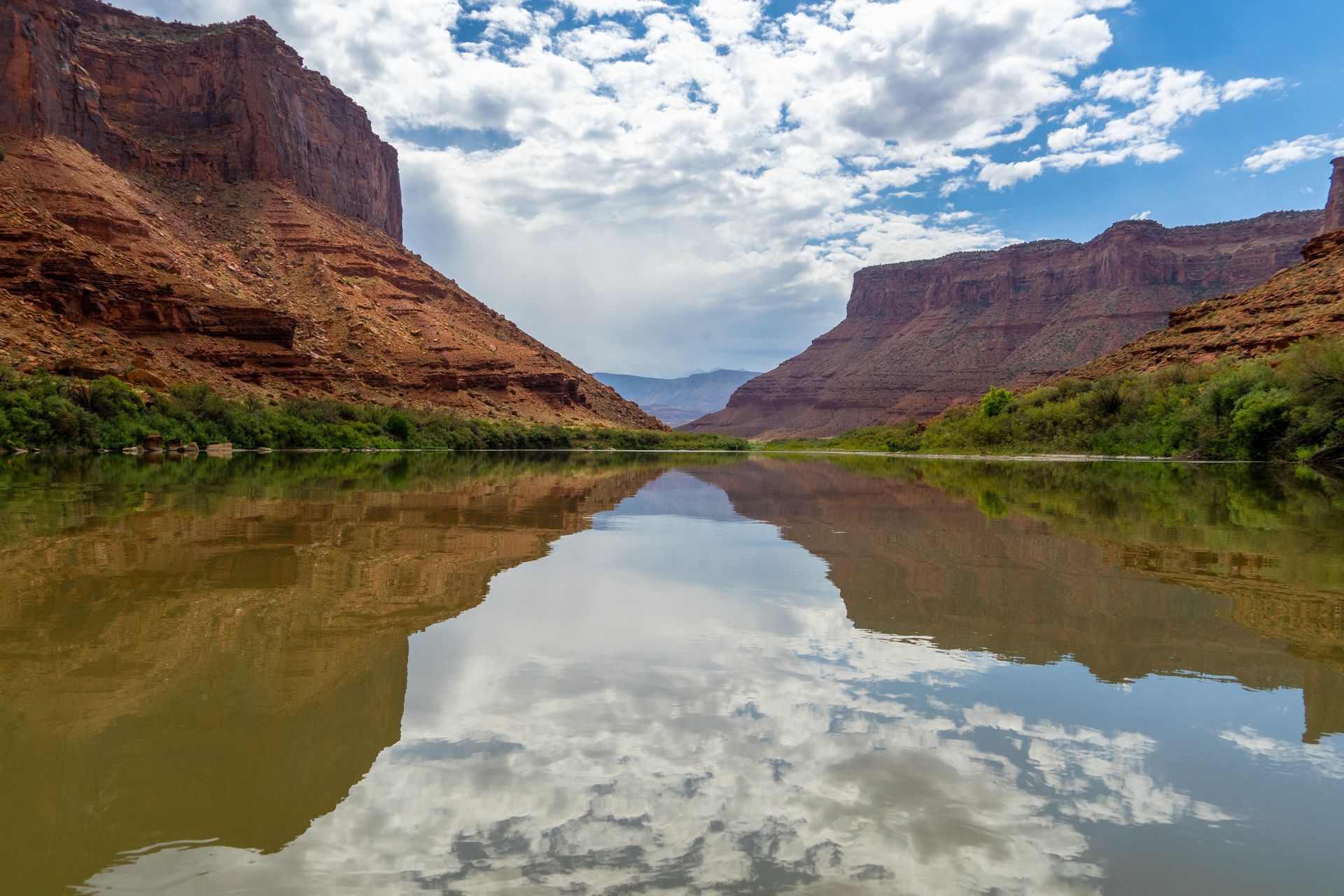
In the West, our rivers are more than just waterways—they’re the lifeblood of our wild landscapes. Whether you’re running cattle, growing peaches, casting a fly, navigating a rapid or simply soaking in a riverside sunset, you’ve felt the power and the serenity of these waters. But how do we know if our rivers are healthy? That’s where restoration, monitoring—and you—come in. At Forever Our Rivers, we improve water quality and restore wildlife along rivers and streams throughout the Southwest including the Gunnison, Verde, South Platte, Dolores, Escalante—even the mighty Colorado. But rivers aren’t static. Once a project is finished, active, skilled monitoring is key to ensure the restoration remains effective. Volunteers are needed now more than ever. And volunteering can take many forms. If you’re not excited about spending the day removing tamarisk with a chain saw, a less arduous way to contribute is by learning to monitor water and habitat health on your local river. It’s easier than you might think—and it’s fascinating. Through research that began in 2018, Western Colorado University students and volunteers led by Associate Professor of Wildlife and Conservation Biology Pat Magee helped shape local policy by monitoring great blue heron nesting sites. Their data led to community outreach and new habitat protections along the Slate River near Crested Butte, Colorado. The volunteers, people like you and me, are helping baby chicks survive. Across the Southwest, groups we collaborate with also rely on volunteers to protect and restore river ecosystems. Running now through May 3, Friends of the Verde is seeking volunteers to help with the third annual Bio Blitz , a community-driven event inviting volunteers to help identify as many living species as possible within the Verde Watershed. Rivers Edge West currently lists sixteen volunteer or educational events taking place in the Grand Valley over the next twelve months. The Roaring Fork Conservancy is seeking volunteers April 25 – 29 for the annual Watershed Cleanup on the Fryingpan and Roaring Fork rivers near Carbondale, Colorado. Sometimes you can even get paid to help, Conservation Legacy’s youth crews collect essential water quality data while building job skills and deepening their connection to nature. You can read more about these success stories in the links below. Whether you’re a student, retiree or weekend warrior, there’s a place for you. You don’t need a science degree—just a love for rivers and a willingness to learn. Together, we can keep our waterways clean, our habitats healthy and our communities strong.
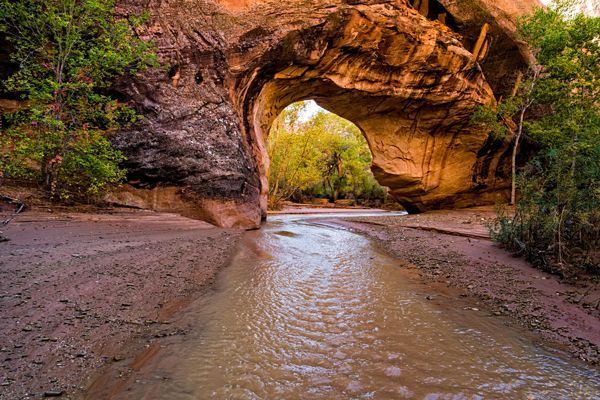
Perennial streams near Escalante, Utah are one of many tributaries impacted by severe drought in the Southwest.
Join Current , our monthly e-newsletter, and learn how river conservation is making a difference across the Southwest.
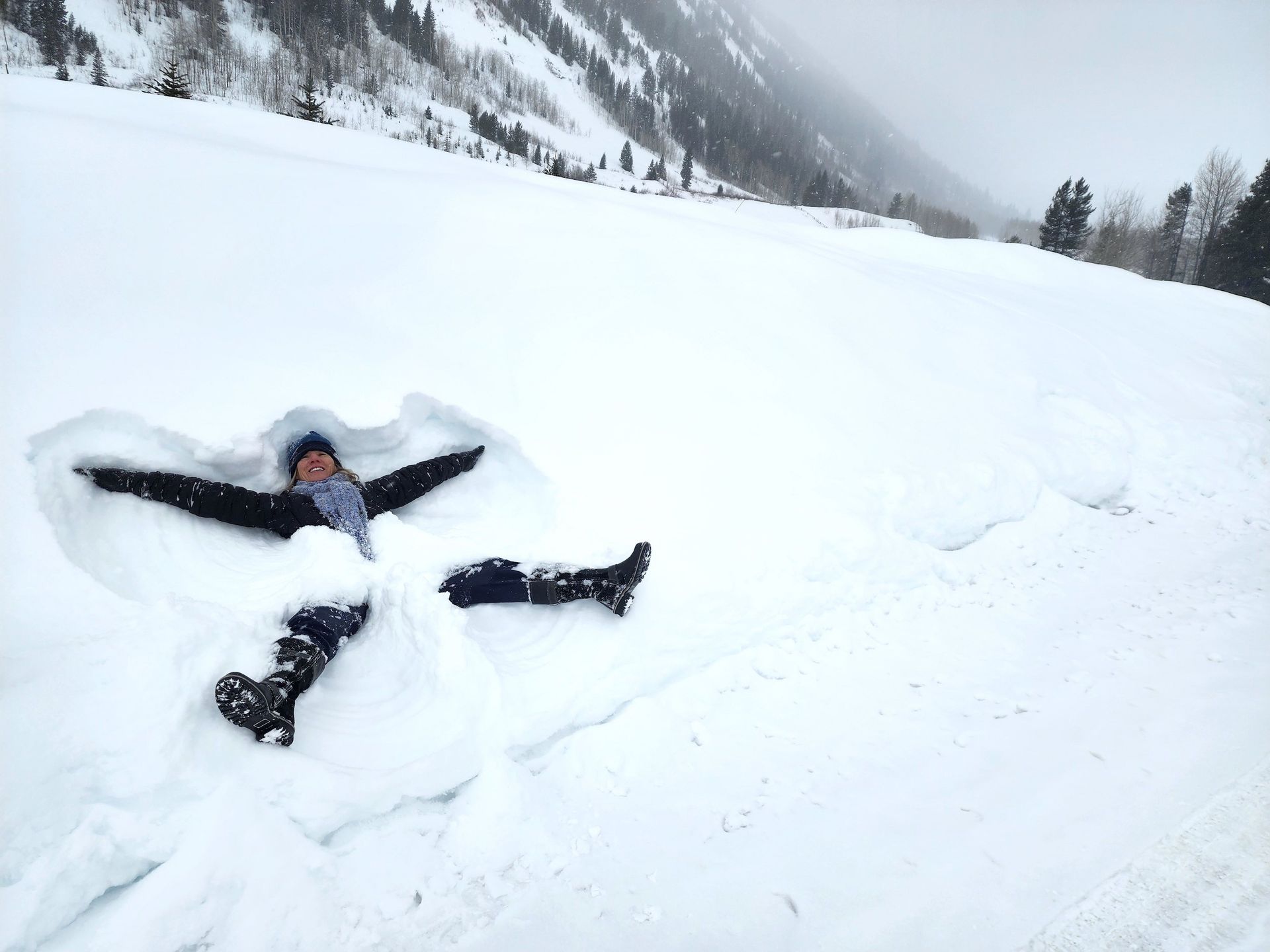
This holiday season, be a snow angel for Forever Our Rivers. As days get shorter and the sun follows a low path on the southern horizon, throughout the four corners’ region our celebrated rivers are quietly freezing over. Tiny ice rafts form, fish retreat to the deepest channels and the once furious currents have decreased to a fraction of summertime glory. On December 21st the solstice will pass and winter will be upon us. It’s officially time for river lovers to stop tracking runoff by cubic feet per second and instead become preoccupied with snow depth high in the Rockies. It’s time to celebrate each winter storm, praise Ullr and do snow dances. And It’s time to make snow angels. This is the time of year when nature starts building reserves in the high alpine lands, storing snow that come spring, will melt and feed our river tributaries. Similarly, this is when Forever Our Rivers needs your help building reserves to support fresh, clean water for people and lush habitat for wildlife year-round. With a gift today, you will make a difference. Every drop—and every snowflake counts. Donate today for yourself or as a gift in the name of your favorite lover of rivers. Your gift will improve the health and vitality of rivers and streams throughout the Southwest all year long. For each donation, we’ll make a snow angel in your honor. Plus, a generous donor will match every gift we receive this holiday season up to $35,000. By doing so, you improve the health and vitality of rivers and streams throughout the Southwest year-round. Making a donation to Forever Our Rivers is safe, simple and tax deductible. Ways to give range from Venmo, donating online or gifts of stock. Learn more here . Or, you can write a check and mail it to Forever Our Rivers at PO Box 1952 Crested Butte, CO 81224.
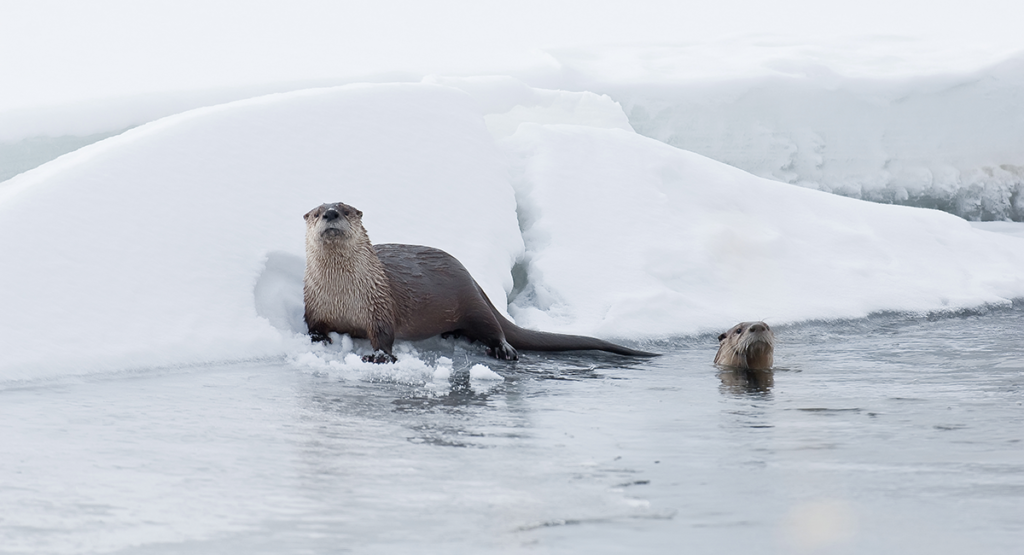
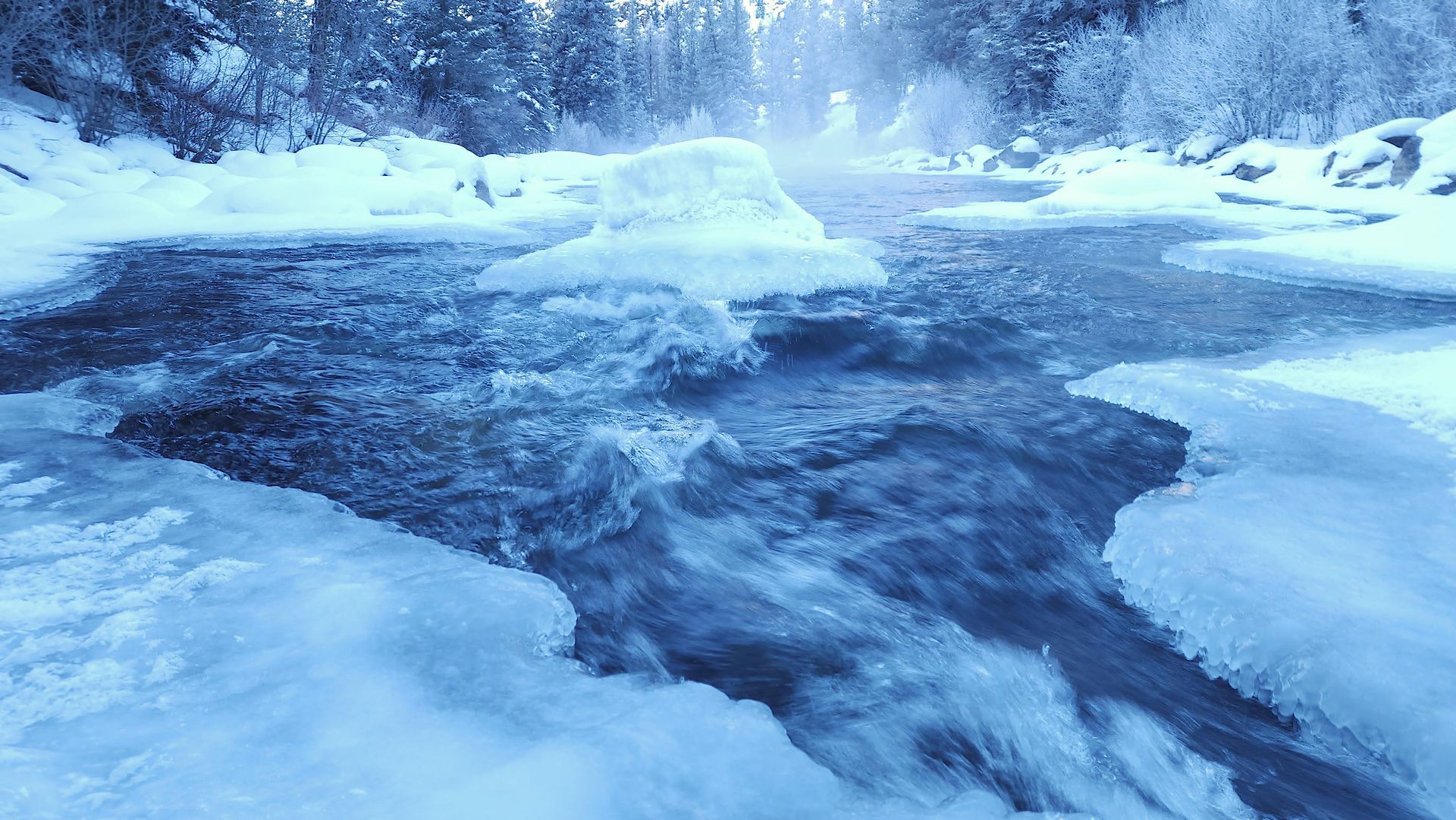
During winter, rivers and streams are often thought of less as we’re holed up in our homes, cozy under blankets next to a roaring fireplace. However, magic is happening out there. In the frigid embrace of below-freezing temperatures, bodies of water transform into icy landscapes, presenting a challenging yet opportunistic environment for plants and wildlife. Plants When the cold sets in and ice blankets the water’s surface, vegetation along rivers and streams starts winter dormancy. Many plants retreat into a state of suspended animation, conserving energy by losing leaves until the thaw of the spring. But, beneath the frozen surface, their roots continue to sustain life by holding onto water and waiting for warmer days. The submerged plants decompose, providing food for aquatic life during winter months. Deep in the river beds, bacteria and other decomposers take advantage of the lower oxygen levels and begin to clean house. Leaves and other organic materials that fell in the Fall start breaking down into new sediment. This sediment will ultimately feed new plant growth life as the seasons change and warm up again. Wildlife For wildlife inhabiting the frigid landscape of frozen streams and rivers, adapting to winter’s icy embrace becomes a matter of survival. Aquatic species such as fish become sluggish, slowing their metabolism to conserve energy in the face of limited food. Trout seek out deeper pools where the water remains relatively unfrozen, providing a refuge against the cold. The cool part about cold-blooded fish like trout, salmon and pike is they can adjust their body temperature to the environment in which they live. Therefore, even at low temperatures, their bodies allow them to swim easily, even if they are a little slower. Amphibians and some insects, on the other hand, may hibernate in terrestrial habitats surrounding the water bodies, awaiting the warmer temperatures of spring. They employ various strategies, from burrowing into the soil to seeking refuge in decaying vegetation, to endure the harsh winter conditions. The icy cold While winter poses challenges for both flora and fauna, the ice itself plays a crucial role in maintaining aquatic ecosystem health. Ice acts like an insulating layer, protecting the water beneath from extreme temperature fluctuations which could ultimately harm aquatic life. In some areas, where cold enough, the frozen surfaces of streams and rivers can offer more room to roam as they become winter highways for certain species. Animals like coyotes, foxes and elk can travel more efficiently in search of harder-to-find food or suitable shelter. Truthfully, we think rivers and streams are just as, if not more, beautiful in the winter than in the summer. It’s captivating to think about the adaptability of nature during this time. It’s also important to remember that while most river projects and activities happen in the warmer months, the winter should not be forgotten. Important changes happen then, too. It’s essential to recognize and appreciate the resilience of plants and wildlife that endure and thrive amid frosting conditions. It’s up to all of us to keep our rivers healthy in every season so that when winter circles back around, plants and wildlife that depend on our rivers are set up to thrive. Ideas to help rivers in the winter: Avoid excessive use of de-icers and salts. Conserve water. Avoid clearing vegetation along riverbanks. Support conservation organizations like Forever Our Rivers. Practice responsible winter fishing. Report and clean up pollution.